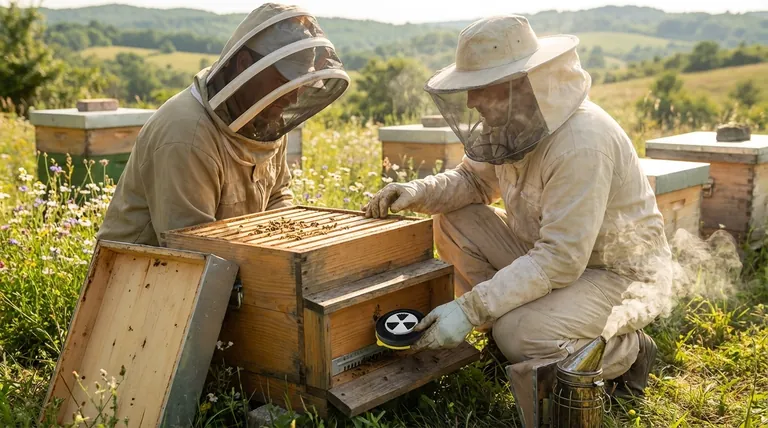
Varroa destructor mites remain one of the most devastating threats to honeybee colonies worldwide. For beekeepers, selecting the right control method isn’t just about efficacy—it’s about balancing mite elimination with colony safety. This guide explores practical, science-backed strategies to manage infestations while protecting your bees’ long-term health.
Understanding Varroa Destructor’s Impact
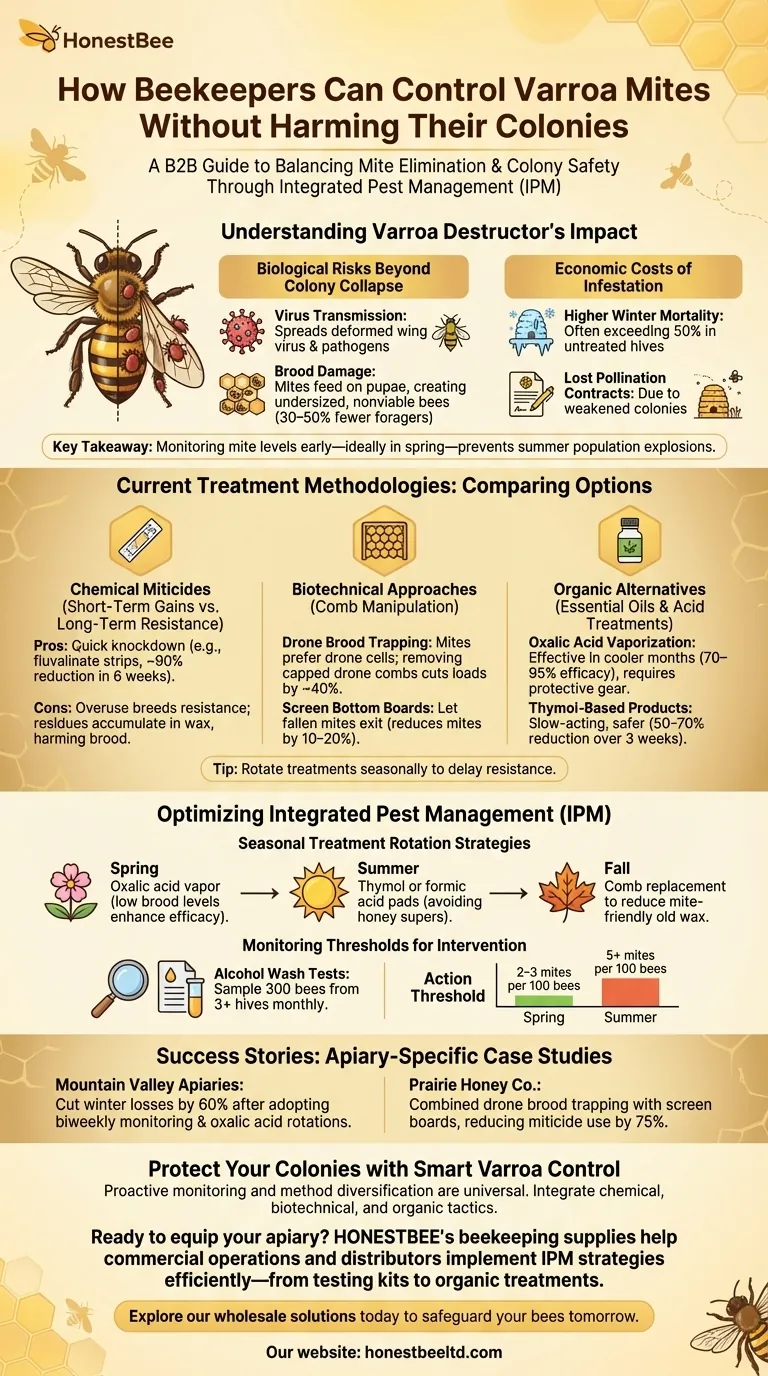
Varroa mites do more than weaken colonies; they vector viruses, reduce lifespans of worker bees, and trigger cascading hive failures.
Biological Risks Beyond Colony Collapse
- Virus Transmission: Mites spread deformed wing virus and other pathogens, crippling bee immune systems.
- Brood Damage: Mites feeding on pupae lead to undersized, nonviable bees. Research shows infested colonies produce 30–50% fewer foragers.
Economic Costs of Infestation
Unchecked infestations can wipe out apiaries within seasons. Beekeepers report:
- Higher winter mortality rates (often exceeding 50% in untreated hives).
- Lost pollination contracts due to weakened colonies.
Key Takeaway: Monitoring mite levels early—ideally in spring—prevents summer population explosions.
Current Treatment Methodologies
No single solution eradicates mites without trade-offs. Here’s how popular methods compare:
Chemical Miticides: Short-Term Gains vs. Long-Term Resistance
- Pros: Quick knockdown (e.g., fluvalinate strips reduce mites by ~90% in 6 weeks).
- Cons: Overuse breeds resistant mites. Residues accumulate in wax, harming brood.
Biotechnical Approaches: Comb Manipulation
- Drone Brood Trapping: Mites prefer drone cells; removing capped drone combs cuts mite loads by ~40%.
- Screen Bottom Boards: Let fallen mites exit hives (reduces mites by 10–20%).
Organic Alternatives: Essential Oils & Acid Treatments
- Oxalic Acid Vaporization: Effective in cooler months (70–95% efficacy), but requires protective gear.
- Thymol-Based Products: Slow-acting but safer for bees (e.g., 50–70% reduction over 3 weeks).
Tip: Rotate treatments seasonally to delay resistance.
Optimizing Integrated Pest Management (IPM)
IPM combines monitoring, cultural practices, and targeted treatments.
Seasonal Treatment Rotation Strategies
- Spring: Oxalic acid vapor (low brood levels enhance efficacy).
- Summer: Thymol or formic acid pads (avoiding honey supers).
- Fall: Comb replacement to reduce mite-friendly old wax.
Monitoring Thresholds for Intervention
-
Alcohol Wash Tests: Sample 300 bees from 3+ hives monthly.
- Action Threshold: 2–3 mites per 100 bees in spring; 5+ in summer.
Success Stories: Apiary-Specific Case Studies
- Mountain Valley Apiaries: Cut winter losses by 60% after adopting biweekly monitoring and oxalic acid rotations.
- Prairie Honey Co.: Combined drone brood trapping with screen boards, reducing miticide use by 75%.
Protect Your Colonies with Smart Varroa Control
Every hive’s needs differ, but proactive monitoring and method diversification are universal. By integrating chemical, biotechnical, and organic tactics, beekeepers can sustain healthy colonies without over-relying on any single solution.
Ready to equip your apiary? HONESTBEE’s beekeeping supplies help commercial operations and distributors implement IPM strategies efficiently—from testing kits to organic treatments. Explore our wholesale solutions today to safeguard your bees tomorrow.
Guida Visiva
Prodotti correlati
- Vaporizzatore di acido ossalico 12V per il trattamento dell'acaro della varroa delle api
- Vaporizzatore di acido ossalico durevole da 12V per il trattamento dell'acaro della varroa Strumento per l'apicoltura dell'alveare
- Vaporizzatore dell'acido ossalico resistente 12V per il trattamento dell'acaro Varroa dell'ape in apicoltura Fumigatore Atomizzatore
- Dispenser circolare compatto per il trattamento antiacaro delle api
- Evaporatore di rimozione dell'acaro dell'ape 12V Vaporizzatore dell'acido ossalico per il trattamento di fumigazione dell'ape 180W Atomizzazione
Articoli correlati
- Come la tempistica senza covata sblocca il pieno potenziale dell'acido ossalico contro l'acaro Varroa
- Come padroneggiare la vaporizzazione dell'acido ossalico per un controllo sicuro ed efficace dei varroa
- Ottimizzazione del Controllo della Varroa: Una Guida alla Rotazione Basata sulla Scienza per gli Apicoltori
- Come Rilevare e Sconfiggere la Sindrome dell'Acariasi Varroa nelle Tue Arnie
- Come gli Acari Varroa Provocano il Collasso delle Api: Vie Virali e Soluzioni Pratiche






