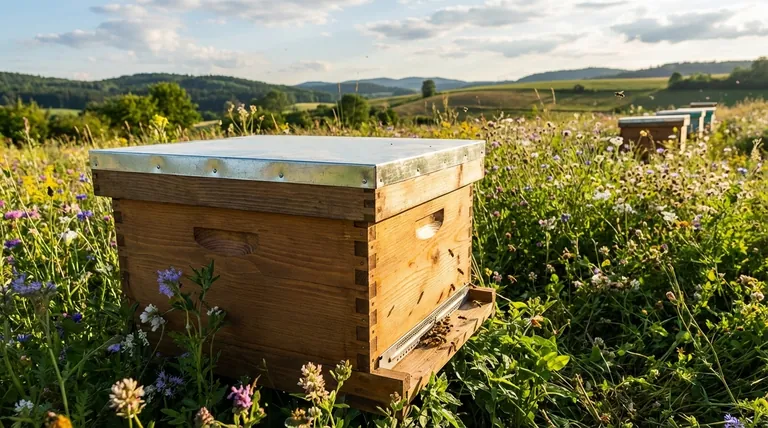
Beekeepers know that hive longevity depends on weather protection. The outer telescoping cover isn’t just a lid—it’s a precision-engineered shield combining durable materials and adaptive design. Here’s how its construction defends colonies against rain, wind, and temperature swings while outlasting traditional flat covers.
Understanding the Outer Telescoping Cover
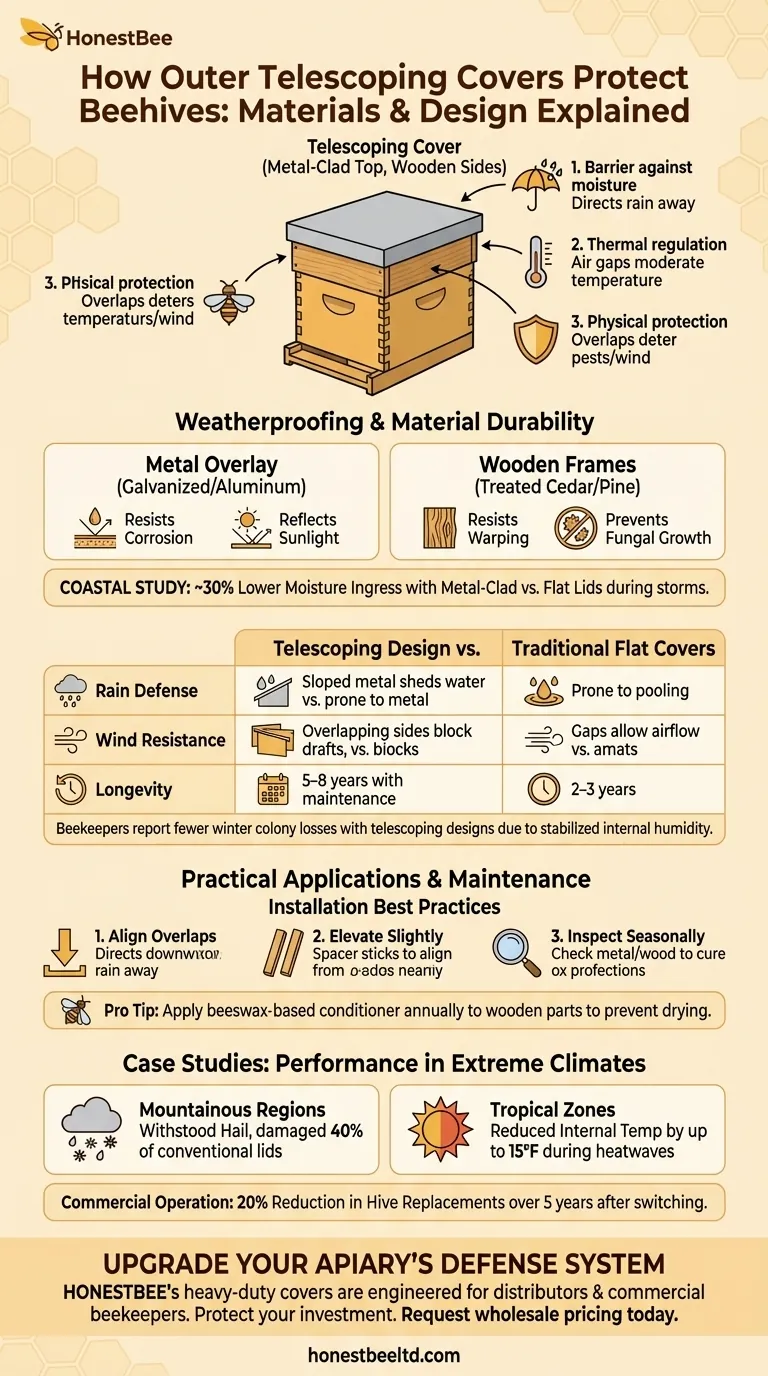
Unlike basic lids, telescoping covers extend downward to overlap hive bodies, creating a weather-resistant seal. This two-part system—typically featuring a metal-clad top and wooden sides—serves three critical functions:
- Barrier against moisture: Metal sheeting prevents water absorption and directs rainfall away from hive interiors.
- Thermal regulation: Air gaps between the inner and outer covers moderate temperature fluctuations.
- Physical protection: Overlapping sides deter pests and reduce wind-driven debris entry.
Research shows properly maintained telescoping covers can extend hive lifespan by several seasons compared to unprotected setups.
Weatherproofing Mechanisms and Material Durability
The metal overlay (often galvanized steel or aluminum) resists corrosion while reflecting sunlight to minimize heat absorption. Key material advantages include:
- Wooden frames: Cedar or pine components treated with non-toxic sealants resist warping and fungal growth.
- Overlap joints: Tight-fitting seams prevent capillary action that draws moisture inward.
A study of apiaries in coastal regions found hives with metal-clad telescoping covers had approximately 30% lower moisture ingress during storms versus flat wooden lids.
Telescoping Design vs. Traditional Flat Covers
| Feature | Telescoping Cover | Flat Cover |
|---|---|---|
| Rain Defense | Sloped metal sheds water | Prone to pooling |
| Wind Resistance | Overlapping sides block drafts | Gaps allow airflow |
| Longevity | 5–8 years with maintenance | 2–3 years before replacement |
Beekeepers report fewer winter colony losses with telescoping designs due to stabilized internal humidity.
Practical Applications and Maintenance
Installation Best Practices for Maximum Protection
- Align overlaps downward: Ensure the cover’s extended sides fully shield hive body joints.
- Elevate slightly: Use spacer sticks to create ventilation gaps without compromising the seal.
- Inspect seasonally: Check metal surfaces for dents and wood for cracks before extreme weather.
Pro tip: Applying a beeswax-based conditioner to wooden parts annually prevents drying and splitting.
Case Studies: Performance in Extreme Climates
- Mountainous regions: Telescoping covers withstood hailstorms that damaged 40% of conventional lids in a Colorado apiary trial.
- Tropical zones: Metal tops reduced internal hive temperatures by up to 15°F during heatwaves, per Florida beekeeper logs.
One commercial operation documented a 20% reduction in hive replacements over five years after switching to telescoping designs.
Upgrade Your Apiary’s Defense System
HONESTBEE’s heavy-duty telescoping covers are engineered for distributors and commercial beekeepers who prioritize hive durability. Protect your investment with designs tested in real-world conditions—request wholesale pricing today.
Products You Might Be Looking For:
Explore professional beekeeping protective gear
Guida Visiva
Prodotti correlati
- Coperchio telescopico per arnia Coperchio con lamiera zincata per arnia e coperchio esterno per arnia Langstroth
- Copertura interna dell'alveare per l'apicoltura Copertura interna dell'alveare
- Avvolgimento invernale isolato professionale per l'apicoltura
- Cappello da apicoltore premium in stile cowboy con velo di visibilità, attrezzatura protettiva professionale per apicoltura all'aperto
- Supporto per arnia in metallo Supporto per cassetta delle api per l'apicoltura
Articoli correlati
- Come i coperchi telescopici per arnie superano le prestazioni nei climi freddi: un'analisi costi-benefici
- Come Scegliere tra Coperture Telescopiche e Migratorie per l'Alveare Langstroth
- How Beehive Top Cover Design and Materials Protect Your Colony's Health
- How to Protect Hive Roofs Sustainably: Tung Oil Techniques and Maintenance Strategies
- L'interfaccia silenziosa: come una semplice copertura interna previene una guerra nell'alveare