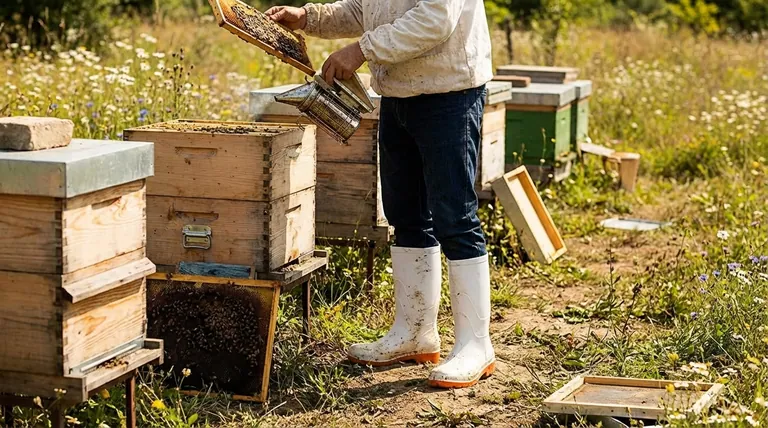
Beekeeping demands specialized footwear that balances protection, environmental adaptability, and budget. Whether you're inspecting hives in humid climates or navigating rocky terrains, the right footwear prevents stings, enhances mobility, and lasts seasons. Here’s how to select options tailored to your apiary’s unique needs—without overspending.
Beekeeping Footwear Essentials
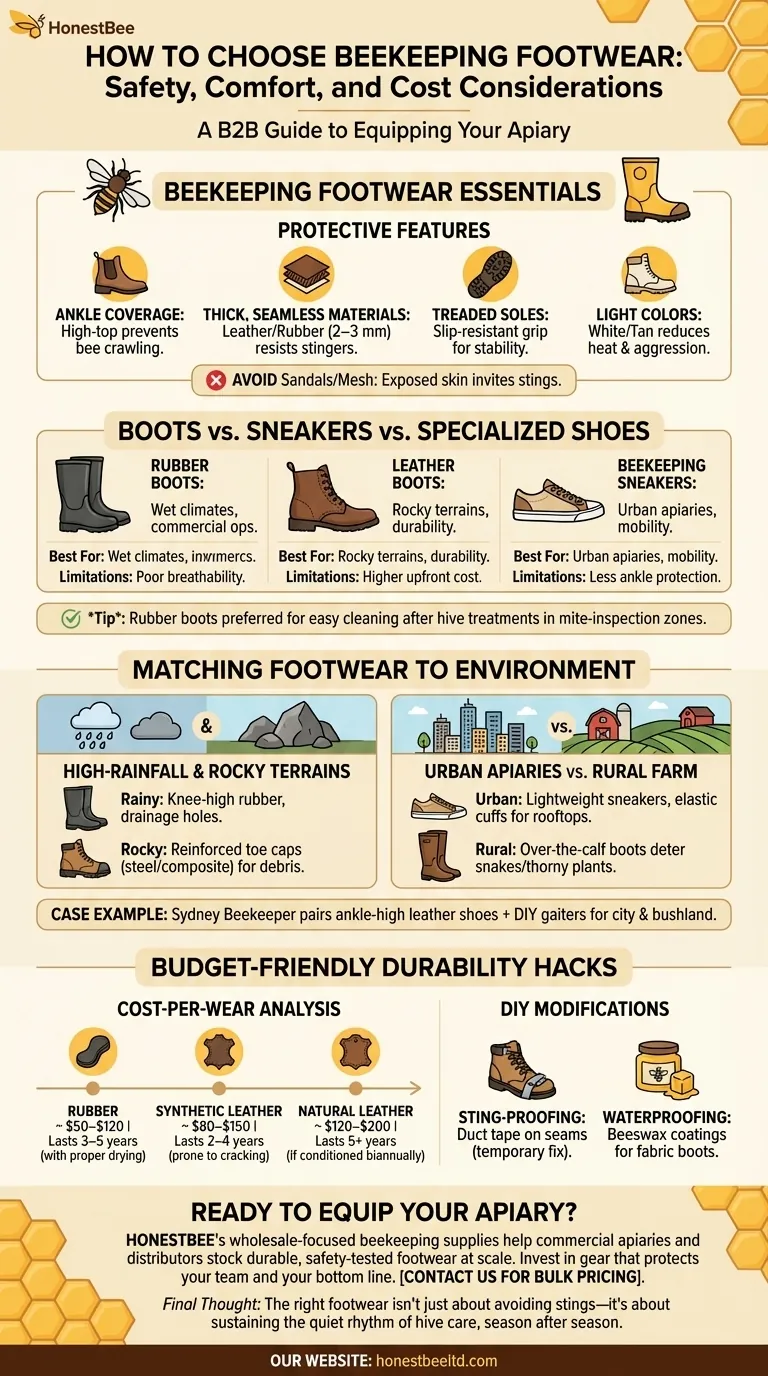
Protective Features Every Beekeeper Needs
Prioritize these non-negotiable safety elements:
- Ankle Coverage: High-top boots or shoes prevent bees from crawling inside.
- Thick, Seamless Materials: Leather or rubber (2–3 mm thick) resists stingers.
- Treaded Soles: Slip-resistant grips stabilize wet or uneven surfaces.
- Light Colors: White or tan reduces heat absorption and bee aggression.
Avoid sandals or mesh shoes—exposed skin invites stings, especially during invasive inspections like Varroa mite checks.
Boots vs. Sneakers vs. Specialized Shoes: Pros and Cons
| Type | Best For | Limitations |
|---|---|---|
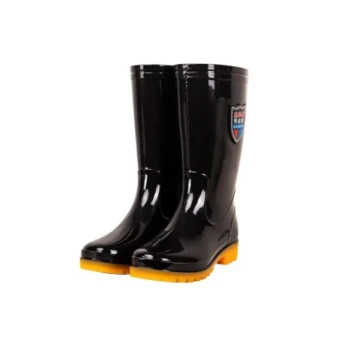
| Rubber Boots | Wet climates, commercial ops | Poor breathability |
| Leather Boots | Rocky terrains, durability | Higher upfront cost |
| Beekeeping Sneakers | Urban apiaries, mobility | Less ankle protection |
Tip: Beekeepers in mite-inspection zones (e.g., Australia) favor rubber boots for easy cleaning after hive treatments.
Matching Footwear to Your Beekeeping Environment
Solutions for High-Rainfall or Rocky Terrains
- Rainy Areas: Knee-high rubber boots with drainage holes prevent waterlogging.
- Rocky Ground: Reinforced toe caps (e.g., steel or composite) shield against sharp debris.
Urban Apiaries vs. Rural Farm Footwear Strategies
- Urban: Lightweight sneakers with elastic cuffs suit small-scale hives on rooftops.
- Rural: Over-the-calf boots deter snakes and thorny plants in wildflower fields.
Case Example: A Sydney beekeeper pairing ankle-high leather shoes with DIY gaiters adapts to both city rooftops and bushland inspections.
Budget-Friendly Durability Hacks
Cost-Per-Wear Analysis of Common Materials
- Rubber: ~$50–$120; lasts 3–5 years with proper drying.
- Synthetic Leather: ~$80–$150; 2–4 years but prone to cracking.
- Natural Leather: ~$120–$200; 5+ years if conditioned biannually.
DIY Modifications for Existing Footwear
- Sting-Proofing: Apply duct tape to shoe seams (temporary fix).
- Waterproofing: Beeswax coatings enhance fabric boots.
Ready to Equip Your Apiary?
HONESTBEE’s wholesale-focused beekeeping supplies help commercial apiaries and distributors stock durable, safety-tested footwear at scale. Invest in gear that protects your team and your bottom line—[contact us] to explore bulk pricing.
Final Thought: The right footwear isn’t just about avoiding stings—it’s about sustaining the quiet rhythm of hive care, season after season.
Products You Might Be Looking For:
Explore professional beekeeping protective gear
Guida Visiva
Prodotti correlati
- Scarpe da apicoltura in PVC bianco con suola antinfortunistica antiscivolo
- Scarpe Professionali per Apicoltura in PVC con Suola Antiscivolo Integrata
- Tuta Premium da Apicoltore in Cotone con Velo Rinforzato
- Giacca da apicoltore con cappuccio e velo per apicoltori
- Giacca e velo da apicoltura in cotone bianco per apicoltori
Articoli correlati
- Come Scegliere Scarpe da Apicoltura che Ti Mantengano Fresco e Protetto
- How to Choose Beekeeping Shoes: Safety Features That Actually Work
- Come scegliere gli stivali per l'apicoltura: criteri di sicurezza, durata e comfort spiegati
- Come scegliere calzature da apicoltura che fermino le punture senza sacrificare il comfort
- How to Choose Beekeeping Footwear That Prevents Stings Without Sacrificing Comfort