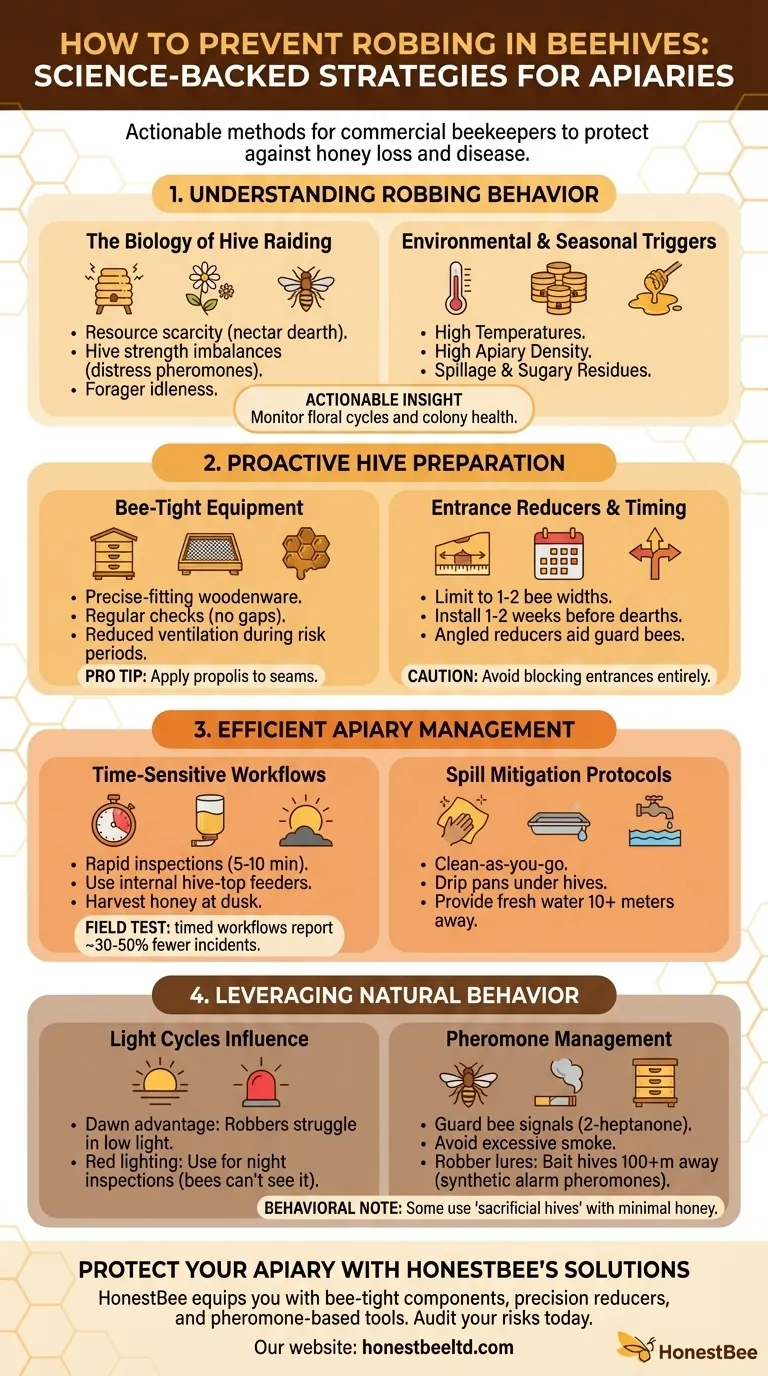
Robbing behavior in honeybee colonies can devastate apiaries, causing significant honey loss and spreading diseases. This guide delivers actionable, biology-informed methods to protect your hives—from equipment selection to pheromone management—tailored for commercial beekeepers and distributors.
Understanding Robbing Behavior
The Biology of Hive Raiding
Robbing occurs when foreign bees invade weaker colonies to steal honey. Key biological drivers include:
- Resource scarcity: Nectar dearths in late summer/fall trigger desperation.
- Hive strength imbalances: Weak colonies (e.g., queenless or diseased) emit distress pheromones, attracting robbers.
- Forager idleness: During low bloom periods, unemployed foragers turn to raiding.
Actionable Insight: Monitor local floral cycles and colony health to anticipate risk periods.
Environmental and Seasonal Triggers
Robbing spikes under these conditions:
- Temperature: More frequent during warm, dry spells (reduced nectar flow).
- Apiary density: High hive concentration increases competition.
- Spillage: Unsealed honey or sugary residues near hives acts as a beacon.
Preventive Step: Schedule inspections in early morning/late evening when robbing activity is lowest.
Proactive Hive Preparation
Selecting and Maintaining Bee-Tight Equipment
- Material matters: Use hives with precise-fitting woodenware or polystyrene to minimize gaps.
- Regular checks: Replace warped frames or cracked hive bodies that create entry points.
- Ventilation balance: Screened bottom boards should have reduced openings during robbing season.
Pro Tip: Apply a thin propolis coat to hive seams—bees naturally reinforce these barriers.
Entrance Reducers: Types and Timing
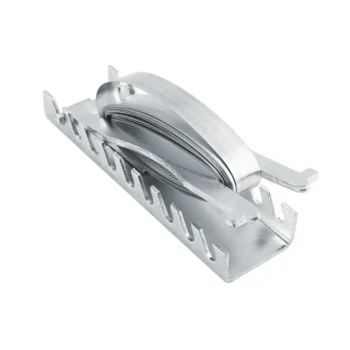
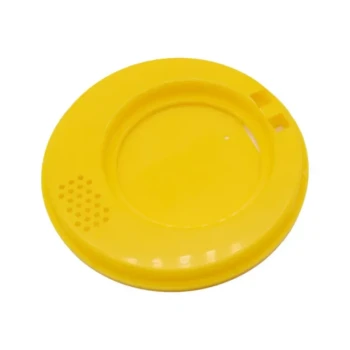
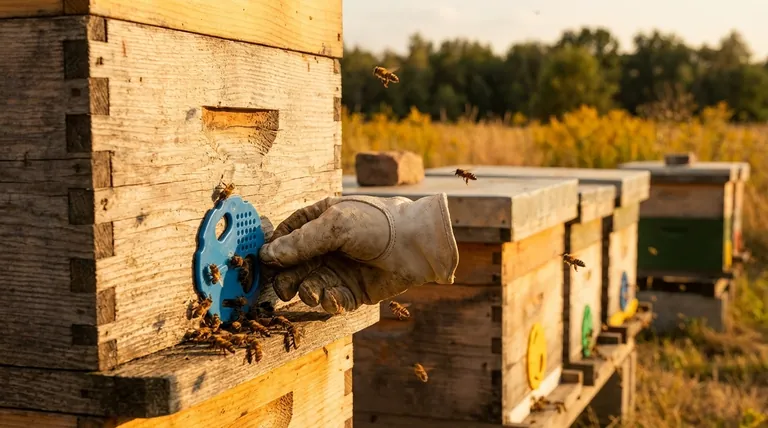
- Adjustable reducers: Limit openings to 1–2 bee widths during high-risk periods.
- Seasonal timing: Install reducers 1–2 weeks before expected nectar dearths.
- Directional aids: Angled reducers force robbers to navigate obstacles, giving guard bees an advantage.
Caution: Avoid blocking entrances entirely—this traps heat and hampers ventilation.
Efficient Apiary Management
Time-Sensitive Workflows to Minimize Exposure
- Rapid inspections: Complete hive checks within 5–10 minutes to reduce disturbance.
- Feeding protocols: Use internal hive-top feeders instead of open containers.
- Harvest timing: Extract honey at dusk when foraging activity ceases.
Field Test: Beekeepers using timed workflows report roughly 30–50% fewer robbing incidents.
Spill Mitigation Protocols
- "Clean-as-you-go" rule: Wipe tools and suits free of honey/syrup immediately after use.
- Drip pans: Place absorbent mats under hives during honey extraction.
- Water sources: Provide fresh water 10+ meters from hives to deter bees from seeking sugary spills.
Leveraging Natural Bee Behavior
How Light Cycles Influence Foraging
- Dawn advantage: Bees orient best in low light; robbers struggle to navigate unfamiliar hives early in the day.
- Red lighting: Use red bulbs during night inspections—bees can’t see this wavelength, reducing agitation.
Pheromone Management for Hive Defense
-
Guard bee signals: Healthy colonies emit 2-heptanone, a deterrent pheromone. Boost this by:
- Maintaining strong queen-right colonies.
- Avoiding excessive smoke during inspections (it masks pheromones).
- Robber lures: Place frames with synthetic alarm pheromones (e.g., isopentyl acetate) in bait hives 100+ meters away to divert raiders.
Behavioral Note: Some commercial operations use "sacrificial hives" with minimal honey stores to absorb robbing pressure.
Protect Your Apiary with HONESTBEE’s Robbing-Prevention Solutions
Robbing isn’t inevitable—it’s a manageable challenge with the right strategies and equipment. HONESTBEE equips commercial beekeepers and distributors with bee-tight hive components, precision entrance reducers, and pheromone-based tools to safeguard your colonies.
Next Step: Audit your apiary’s robbing risks today. Pair these science-backed methods with HONESTBEE’s wholesale-grade supplies to reduce losses and maintain hive productivity.
Guida Visiva
Prodotti correlati
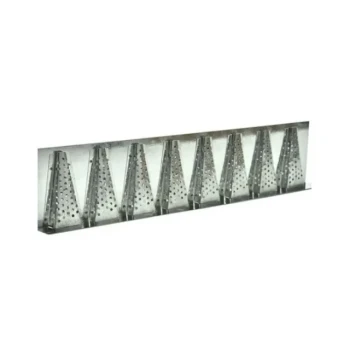
- Protezione antirapina a 8 coni in acciaio zincato
- Sistema di cinghie Emlock ad alta sicurezza
- Fuga delle api a labirinto circolare per una gestione efficiente dell'alveare
- Trappola per alveari in plastica nera per coleotteri da fienile
- Ingresso dell'alveare professionale reversibile
Articoli correlati
- La sicurezza dell'alveare è un problema di geometria: padroneggiare l'ingresso dell'arnia
- La Fortezza Inespugnabile: Un Approccio Sistemico per Proteggere gli Alveari dalle Formiche
- Espulsori per Regine in Metallo: La Soluzione a Lungo Termine per Arnie Sane e Produttive
- Come gli esclusori di regina in metallo offrono un valore decennale per gli apiari pronti alla sterilizzazione
- Oltre il Costo Iniziale: Perché gli Escludi Regina in Metallo Sono un Investimento nell'Efficienza dell'Apiario