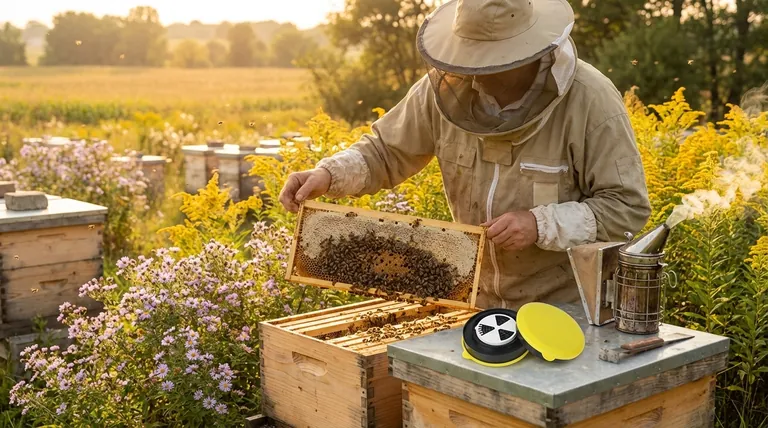
La fine dell'estate porta una sfida critica per gli apicoltori: l'aumento delle popolazioni di acari Varroa minaccia la salute dell'alveare proprio quando i melari raggiungono il picco di produzione. Bilanciare un'efficace soppressione degli acari con la conservazione della qualità del miele richiede un monitoraggio strategico, interventi proattivi e una cooperazione a livello comunitario. Questa guida fornisce soluzioni attuabili su misura per gli apiari commerciali che cercano approcci di gestione non invasivi.
Sfide legate all'aumento degli acari a fine estate
Le popolazioni di Varroa destructor aumentano a fine estate a causa di tre fattori concomitanti:
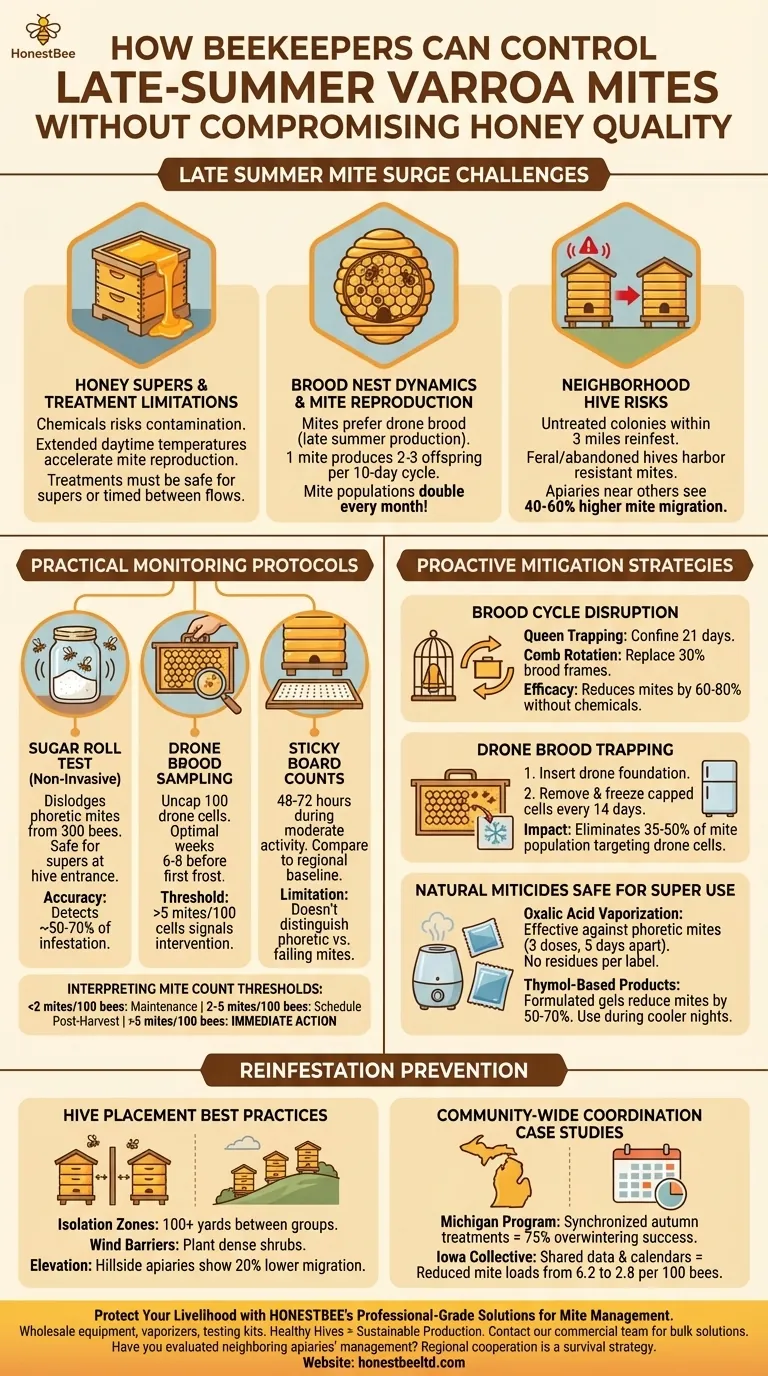
Melari e limitazioni dei trattamenti
- La maggior parte dei miticidi chimici non può essere applicata durante il flusso di nettare a causa del rischio di contaminazione
- Le temperature diurne prolungate accelerano i cicli di riproduzione degli acari
- Considerazione chiave: I trattamenti devono essere sicuri per i melari o programmati tra i flussi di nettare
Dinamiche del nido di covata e riproduzione degli acari
- Gli acari infestano preferibilmente la covata di fuchi, che le colonie producono ancora a fine estate
- Un singolo acaro può produrre 2-3 discendenti per ogni ciclo di 10 giorni della covata di operaie
- Finestra critica: Le popolazioni di acari raddoppiano ogni mese durante l'alta stagione
Rischi dagli alveari vicini
- Le colonie non trattate nel raggio di 5 km agiscono come fonti di reinfestazione
- Gli alveari selvatici e le attrezzature abbandonate spesso ospitano acari resistenti
- Dati regionali: Gli apiari vicini ad attività commerciali registrano tassi di migrazione degli acari superiori del 40-60%
Protocolli di monitoraggio pratici
Metodi di campionamento non invasivi durante il flusso di nettare
-
Test dello zucchero a velo
- Utilizza zucchero a velo per staccare gli acari foretici da 300 api
- Sicuro per i melari se eseguito all'ingresso dell'alveare
- Nota sulla precisione: Rileva circa il 50-70% dei livelli di infestazione reali
-
Campionamento della covata di fuchi
- La disopercolatura di 100 celle di fuchi rivela il successo riproduttivo degli acari
- Ottimale durante le settimane 6-8 prima della prevista prima gelata
- Soglia: >5 acari per 100 celle segnalano la necessità di un intervento
-
Conteggio con fogli adesivi
- Posizionare i fogli per 48-72 ore durante periodi di attività moderata
- Confrontare le cadute con i dati di riferimento regionali
- Limitazione: Non distingue tra acari foretici e acari caduti
Interpretazione delle soglie di conteggio degli acari
- <2 acari/100 api: Solo monitoraggio di mantenimento
- 2-5 acari/100 api: Programmare il trattamento post-raccolto
- >5 acari/100 api: Richiede un'azione immediata mirata alla covata
Strategie di mitigazione proattive
Tecniche di interruzione del ciclo di covata
- Gabbietta per la regina: Confinare la regina su 1-2 telaini per 21 giorni per creare un periodo senza covata
- Rotazione dei telaini: Sostituire il 30% dei telaini di covata per interrompere i cicli di riproduzione degli acari
- Dati di efficacia: I metodi di interruzione riducono il carico di acari del 60-80% senza prodotti chimici
Efficacia della trappola per covata di fuchi
- Inserire fogli cerei per fuchi nei telaini perimetrali
- Rimuovere e congelare le celle opercolate ogni 14 giorni
- Impatto: Elimina il 35-50% della popolazione di acari che punta alle celle dei fuchi
Miticidi naturali sicuri per l'uso con i melari
- Vaporizzazione di acido ossalico
- Efficace contro gli acari foretici se applicato in 3 dosi, a 5 giorni di distanza
- Non lascia residui nel miele se utilizzato secondo le istruzioni dell'etichetta
- Prodotti a base di timolo
- I gel formulati riducono gli acari del 50-70% senza contaminare i favi
- Consiglio per l'applicazione: Utilizzare durante le notti più fresche per ridurre al minimo l'irritazione delle api
Prevenzione della reinfestazione
Best practice per il posizionamento dell'alveare
- Zone di isolamento: Mantenere oltre 90 metri tra i gruppi di trattamento
- Barriere antivento: Piantare arbusti densi per ridurre la deriva delle api
- Elevazione: Gli apiari in collina mostrano tassi di migrazione degli acari inferiori del 20%
Casi studio di coordinamento a livello comunitario
- Programma della Michigan Beekeepers Association
- Trattamenti autunnali sincronizzati in 8 contee
- Risultato in un successo di svernamento del 75% contro il 45% nelle aree non partecipanti
- Collettivo di apiari commerciali dell'Iowa
- Dati di monitoraggio e calendari di trattamento condivisi
- Riduzione del carico medio di acari da 6,2 a 2,8 per 100 api in 3 stagioni
Proteggi la tua attività con le soluzioni di livello professionale di HONESTBEE
Gli apicoltori commerciali si affidano alle attrezzature di HONESTBEE, focalizzate sulla vendita all'ingrosso, per una gestione degli acari scalabile. Dai vaporizzatori ai kit di test, i nostri sistemi aiutano i distributori a dotare gli apiari di strumenti supportati dalla ricerca: perché alveari sani significano una produzione di miele sostenibile. Contatta il nostro team commerciale per soluzioni all'ingrosso su misura per le dimensioni della tua attività.
Hai valutato come i calendari di gestione degli apiari vicini influiscono sulla pressione degli acari nel tuo apiario? La cooperazione regionale non è solo una questione di buon vicinato: è una strategia di sopravvivenza nell'apicoltura moderna.
Guida Visiva
Prodotti correlati
- Vaporizzatore di acido ossalico durevole da 12V per il trattamento dell'acaro della varroa Strumento per l'apicoltura dell'alveare
- Varroa Easy Check Kit per il test dell'acaro con barattolo per il lavaggio con alcol
- Dispenser circolare compatto per il trattamento antiacaro delle api
- Vaporizzatore di acido ossalico 12V per il trattamento dell'acaro della varroa delle api
- Dosatore regolabile di acido formico e acetico per il trattamento degli acari delle api
Articoli correlati
- Come la tempistica senza covata sblocca il pieno potenziale dell'acido ossalico contro l'acaro Varroa
- Come padroneggiare la vaporizzazione dell'acido ossalico per un controllo sicuro ed efficace dei varroa
- Ottimizzazione del Controllo della Varroa: Una Guida alla Rotazione Basata sulla Scienza per gli Apicoltori
- Come la vaporizzazione dell'acido ossalico controlla in modo sicuro gli acari proteggendo le api
- How Beekeepers Can Control Varroa Mites Without Harming Their Colonies